


Las Vegas, NV — One of the few glaring weaknesses this Wisconsin men’s hockey team has is seemingly growing into a strength at just the right time. Despite entering the Frozen Four with the second-worst penalty kill in men’s Division I college hockey, the Wisconsin Badgers leaned on their PK to great success to reach the national title game, proving their special teams units are good enough to win it all.
When looking ahead to the path Wisconsin would potentially face to reach Saturday’s national championship game, its lackluster penalty kill appeared to be its predictable Achilles heel. Two of the country’s best power plays tested the Badgers, and UW emerged from the challenge better than before.
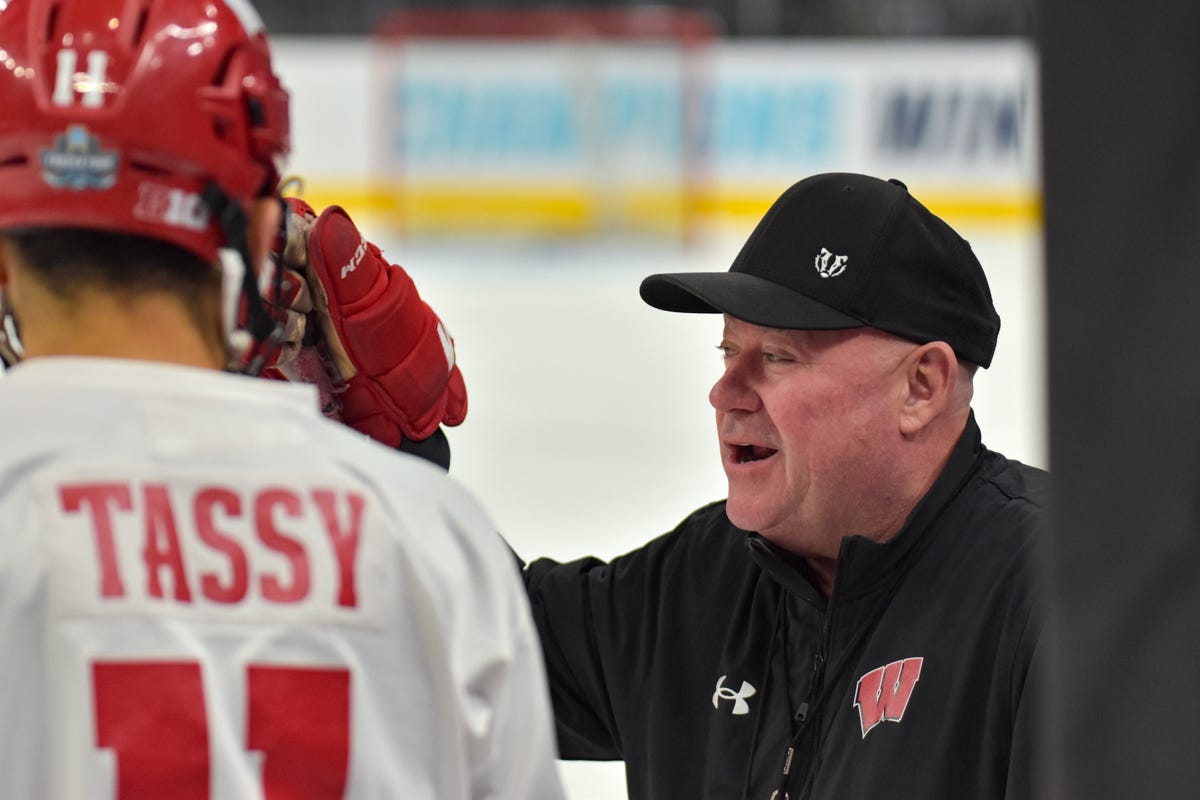
“There’s a lot of things that go into it,” Wisconsin head coach Mike Hastings said of his team’s newfound penalty kill success. “At the end of the day you have to go execute.”
Perfect kill in the Frozen Four
Wisconsin’s PK was on full display in its 2-1 win over the North Dakota Fighting Hawks in the national semifinal. To “survive and move on,” Wisconsin had to kill a handful of minor penalties. Despite UW’s struggles on the kill this season, it kept UND’s top-ten power play unit off the board in all five attempts.
“We spent a lot of time preparing against their power play, watching a lot of film,” Badgers captain Ben Dexheimer said of the effort.
The Fighting Hawks set up one-time opportunities on the faceoff circles throughout the night, but sent five of their 13 shot attempts on the advantage sailing wide. Second-chance opportunities were few and far between for North Dakota as Wisconsin quickly got pucks out of the zone.
“When you get a one-timer, you got to hit your spot,” UND head coach Dane Jackson said in a postgame interview. “They got some clears on us. Especially five-on-three, we should be tenacious enough to keep that puck alive generally. We just didn’t quite have that. Weren’t in sync quite enough there.”
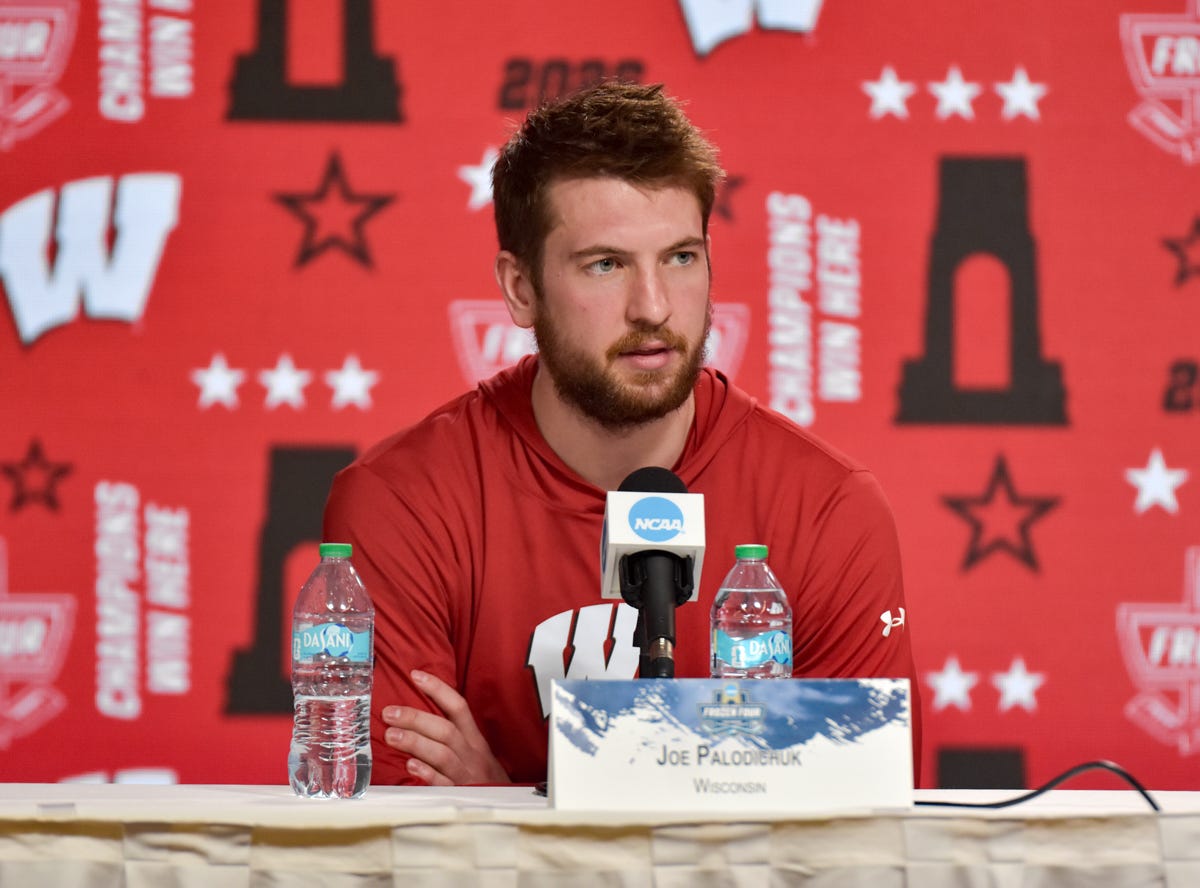
Hastings admitted that needing to kill 1:57 of five-on-three penalty time in the second period “wasn’t a great recipe for success,” but that key moment showcased just how far his team’s PK has come. With Luke Osburn and Joe Palodichuk in the box, not to mention NHL Draft picks Logan Hensler and Zach Schulz still sidelined with lower-body injuries, the Badgers kept the Fighting Hawks off the scoreboard despite limited defensemen.
Wisconsin hockey PK arrives just in time for NCAA Tournament
The success UW enjoyed on Thursday on the kill was not just a blip. It appears to be part of a larger trend. In Wisconsin’s final game before the NCAA Tournament, the Badgers allowed three power-play goals in one of its worst home playoff losses ever. In UW’s final three games before Selection Sunday, opposing PPs went 5-11.
Since the NCAA Tournament bracket reveal, it has been a different story, allowing only 2 PPGs on 10 chances.
The Badgers were perfect against a lackluster Dartmouth Big Green power play in the regional semifinal. The Michigan State Spartans (who boast the second-best PP in the nation) converted both their chances on the advantage against Wisconsin in the regional final, thanks, in part, to a funny bounce off Dexheimer’s stick that sent a puck up and over UW netminder Daniel Hauser‘s head.
That 80% clip is far from among the college hockey elite. Still, the noticeable difference has propelled a Badgers squad that was already excellent at even strength and among the very best on the advantage.
“Honestly, at the end of the day, I think this time of the year it comes down to the want to get the puck out, the want to block shots. I think that was the difference with our kill tonight,” Dexheimer said Thursday. “Guys took a lot of effort on blocking shots, getting in lanes.”
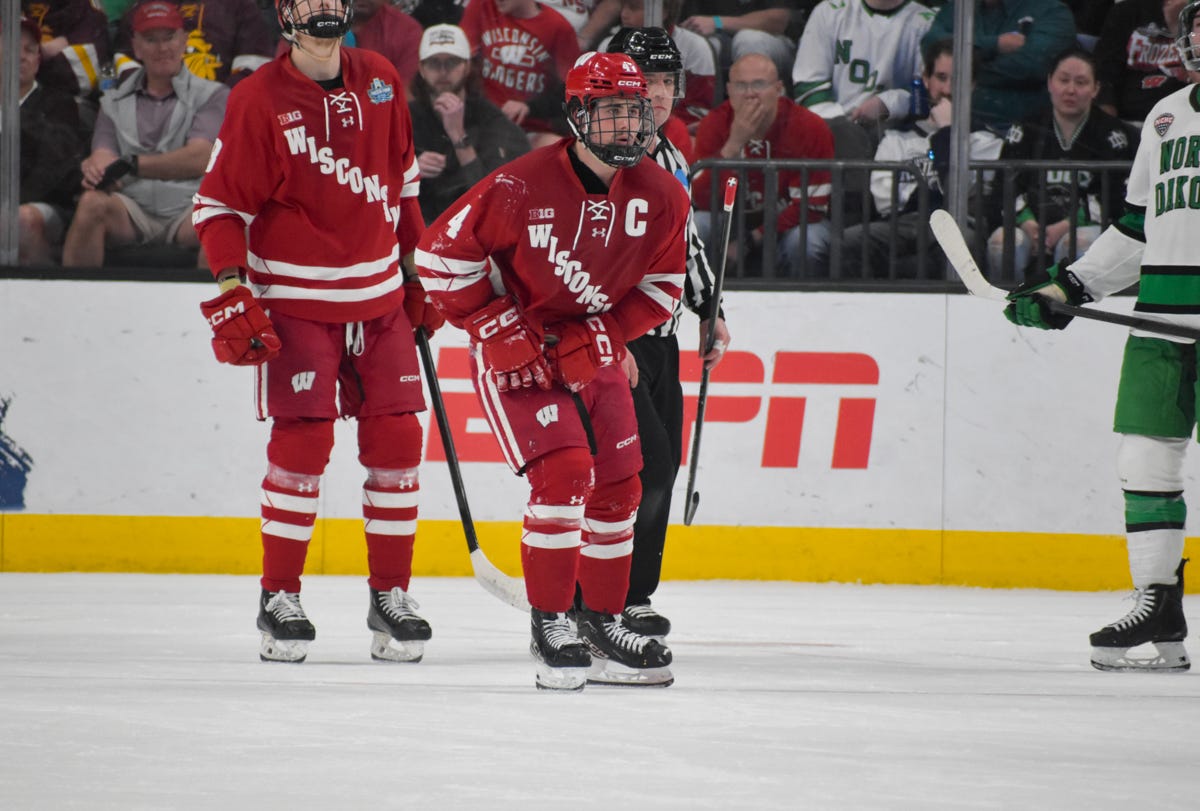
Against UND, Wisconsin logged 19 blocks, more than it had in all but two games this season. Dexheimer personally blocked a game-high five shots, including a “stinger” during that 5-on-3 kill that temporarily sent him to the bench in pain.
“You need a lot of selflessness,” Hastings said Friday of his team’s recent PK efforts. “You saw our captain lay out and take an absolute seed in an area that wasn’t protected and continued to fight through it.”
Badgers have proven they can handle penalty kill adversity in Frozen Four
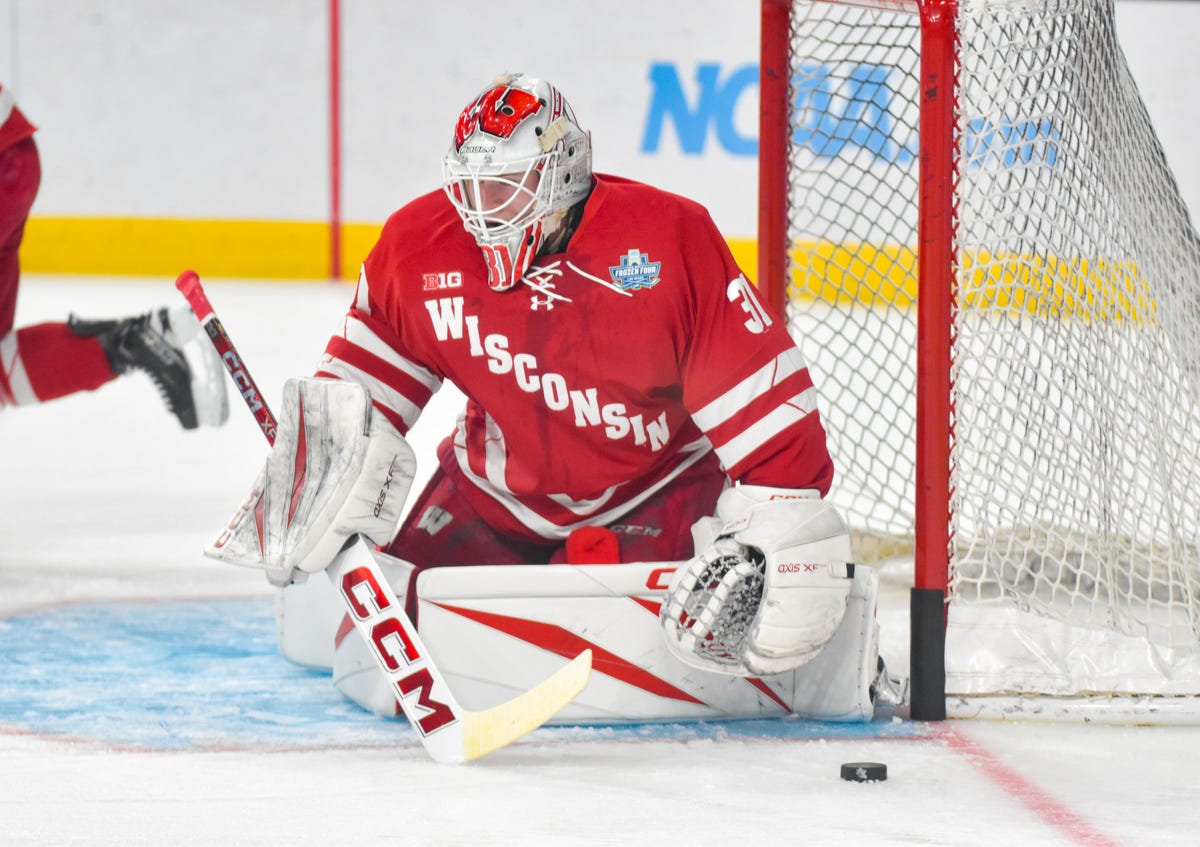
The third-year head coach of the Badgers often espouses the notion that no matter what is going on in front of the net, “if you’re going to kill penalties, you need really good goaltending,” and Hauser has shown he can do enough to lift UW past DU’s power play.
In three NCAA Tournament games, the Alberta native has posted a 1.67 goals against average and a .932 save percentage. Both numbers are far better than his season-long marks of 2.56 and .899.
Despite Wisconsin’s fits and starts on the PK all season long, it appears the UW kill may be a key advantage in Saturday’s national title game. After the Badgers proved capable of keeping one of the country’s best PP units off the board, they have reason to carry additional confidence into their matchup with the Pioneers.
Denver’s middling power play is ranked 37th nationally, converting only 18.8% of chances. DU went 0-5 on the PP in its national semifinal against the Michigan Wolverines, is 1-10 on the advantage in the NCAA Tournament, and 1-12 in its last four games.
Wisconsin and Denver meet in the national title game on Saturday, April 11th. The contest will be televised on ESPN with puck drop scheduled for 4:30 p.m. Central.
Thank you for visiting BadgerBreakaway.com – With your support, we are quickly becoming a leading independent source for news, analysis, and intel on the Wisconsin Badgers hockey and basketball teams.